Standard Bank Fees 2026: When UCount Rewards Don't Cover Costs
Is your UCount tier worth the monthly fees? Complete 2026 Standard Bank statement analysis: account comparisons, true reward value, hidden transaction costs, and when to switch. Free guide.
Disclaimer: This analysis is based on user statement patterns and publicly available Standard Bank information as of January 2026. Fees and account structures change; always verify current pricing at standardbank.co.za. This is not financial advice; opinions expressed are those of the author.
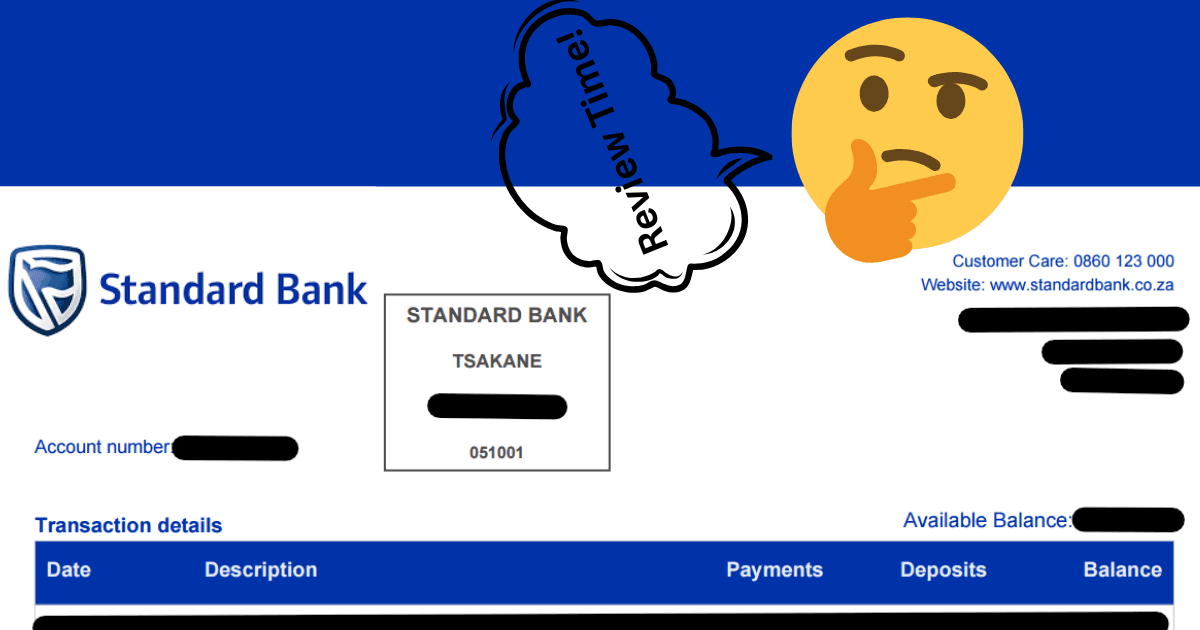
Standard Bank is Africa's largest bank by assets and one of South Africa's oldest financial institutions. With a massive branch network, a wide product range, and deep roots across the country, Standard Bank serves everyone from entry-level banking customers to private banking clients.
The bank offers genuinely useful digital features, free app-based notifications, and bundled account options that provide good value for frequent transactors. That said, Standard Bank's account tier system and fee schedules can be complex. Understanding how they work helps ensure you're on the right account for your needs.
This guide breaks down what your Standard Bank statement is really telling you.
The Account Tier System
Standard Bank offers multiple account tiers with different pricing and features. Note that account names have evolved — here are the current main options as of January 2026:
| Account Type | Monthly Fee (2026) | Key Features |
|---|---|---|
| MyMo / Access | R7.50 | Basic banking, pay-as-you-use or bundled options |
| Bundled Access | ~R53–R78 | Includes free electronic transactions, ATM limits |
| Prestige | R260 | Premium benefits, higher limits, dedicated support |
| Private Banking | R490 | High-net-worth services, dedicated banker |
| Signature | R640 | Top-tier premium services |
Fees effective 1 January 2026; always check standardbank.co.za for latest pricing.
Choosing the Right Tier
The most common opportunity for savings at Standard Bank is ensuring you're on the right account tier for your actual usage. This means:
- Reviewing your transaction volume: Do you make enough transactions to justify bundled pricing?
- Checking included features: Are you using the premium benefits that come with higher tiers?
- Comparing actual costs: Sometimes pay-as-you-use is cheaper; sometimes bundled saves money
What Each Tier Actually Costs
Annual costs at current rates:
- MyMo/Access: ~R90/year + per-transaction fees
- Bundled Access: ~R636–R936/year (includes many free transactions)
- Prestige: ~R3,120/year (bundled + premium benefits)
- Private Banking: ~R5,880/year
The difference between basic Access and Prestige is approximately R3,030 per year.
Key question: What do you get for that difference? Prestige includes airport lounge access, higher transaction limits, and dedicated support. For customers who use these benefits, it may be worthwhile. For others, a bundled Access account provides everything they actually need at a lower cost. Compare this to FNB Bank Fees 2026: Are You Overpaying R1,200/Year?(FNB's simpler pricing structure) which may be easier to navigate.
Understanding Returned Debit Order Fees
When a debit order hits your account with insufficient funds, Standard Bank charges a returned item fee. Understanding these fees helps you avoid unnecessary costs.
Fee Structure by Account Type
Returned debit order fees vary by tier:
| Account Type | Fee Structure |
|---|---|
| MyMo | R10 per returned item |
| Access | 3 free per 12 months, then R25 per item |
| Higher tiers | 3 free per 12 months, then R130 per item |
Note: These are Standard Bank fees only. Merchants may charge additional fees for failed collections.
How Fees Can Accumulate
When multiple debit orders fail in sequence, fees can add up:
Example on Access account (after free allowance used):
- Three returned debit orders = 3 × R25 = R75 in Standard Bank fees
- Plus any merchant penalties
- Plus the original debit orders still need to be paid
Example on higher-tier account (after free allowance):
- Three returned debit orders = 3 × R130 = R390 in Standard Bank fees
Preventing Returned Debit Orders
- Build a buffer: Even R500 as a permanent buffer reduces risk. Our Emergency Fund Calculator can help you calculate an appropriate safety net.
- Stagger debit order dates: Spread them across the month rather than clustering them
- Prioritise by consequence: Ensure critical debit orders (bond, rent, car) are scheduled when funds are available
- Set up alerts: Standard Bank's app offers free balance notifications — use them to see shortfalls coming
- Track your free allowance: Remember you have 3 free returned items per 12 months on most accounts
Common Fees to Understand
Beyond account fees and debit order charges, Standard Bank statements may contain various transaction fees:
Cash Deposit Fees
- ATM deposits (notes): ~R1.80 per R100
- Branch deposits: Higher minimum fees apply (e.g., R100 minimum + R5 per R100)
If you regularly deposit cash, ATM deposits are more cost-effective than branch deposits.
Paper Statement Fees
If you're still receiving paper statements, Standard Bank charges a monthly fee. Switching to e-statements via the app is free and eliminates this cost. Many customers on older account settings haven't made this switch.
SMS Notification Fees
Individual SMS notifications have small per-message fees. However, push notifications through the Standard Bank app are free. Switching to app-based notifications eliminates SMS costs entirely.
International Transaction Markup
Standard Bank applies 2.75% markup on foreign currency transactions. This applies to international online shopping, streaming services billed in foreign currency, and travel expenses. This is competitive with other major South African banks.
Bundled Account Benefits
Bundled Access accounts include valuable features that offset the higher monthly fee:
- Free electronic transactions (debit orders, card swipes, online payments)
- Free ATM withdrawals up to limits (e.g., R2,000/month)
- Free ATM deposits up to limits
- Thereafter: ~R10 per R1,000 withdrawals, ~R2.80 per R100 beyond limits
For customers making 15+ transactions monthly, bundled accounts often provide better value than pay-as-you-use. This is similar to ABSA Rewards Calculator 2026: Which Tier Are You Really In?(Absa's bundled accounts), though pricing and limits differ between banks.
The UCount Rewards Programme
Standard Bank's UCount Rewards programme awards points based on your banking activity and product holdings. Points can be redeemed for shopping vouchers, airtime, flights, and more.
How UCount Earning Works
Your earning rate depends on:
- Account tier: Higher tiers earn more points per rand spent
- Product holdings: Having a Standard Bank home loan, credit card, and insurance boosts your earning tier
- Transaction volume: More qualifying transactions = more points
- Partner shopping: UCount partners offer bonus earning opportunities
When UCount Provides Good Value
UCount genuinely benefits customers who:
- Already hold multiple Standard Bank products for legitimate reasons (home loan, vehicle finance)
- Shop regularly at UCount partners — enhanced earning rates apply
- Are on a tier that matches their transaction volume regardless of rewards
- Would hold the same products even without UCount
Active users who leverage partner shopping and hold multiple genuine Standard Bank products can earn meaningful rewards — potentially R100–R300+ per month for very active users.
When to Be Cautious
Consider carefully if you're thinking of:
- Upgrading accounts primarily for UCount — Calculate whether increased earnings exceed the fee difference
- Taking products just for UCount tiers — Product fees may exceed rewards gains
Example consideration: Moving from Access (R7.50/month) to Prestige (R260/month) adds ~R252/month in fees, or ~R3,030/year. If your UCount earnings don't increase by this amount, the upgrade may not pay off financially — though Prestige's other benefits may still provide value depending on your needs.
What MyFinHealth Finds on Standard Bank Statements
When you upload your Standard Bank statement to MyFinHealth, our analysis identifies patterns specific to Standard Bank's fee structure.
Returned Debit Order Analysis
MyFinHealth identifies months where debit orders were returned and calculates the total fee cost. We help you understand the pattern and suggest strategies to prevent future occurrences.
Account Tier Assessment
We analyse your actual transaction count, types, and volume against Standard Bank's tier pricing. MyFinHealth shows whether your current tier is optimal or whether switching would save money based on your real usage over the statement period.
Fee Pattern Detection
MyFinHealth spots recurring fees — paper statements, SMS charges, and transaction fees — and flags opportunities to reduce costs through digital alternatives or account changes.
Spending Pattern Insights
Beyond fees, MyFinHealth categorises all your transactions to reveal where your money goes — identifying subscriptions, spending patterns, and opportunities to optimise your budget. Use our SARS Tax Calculator to understand your net income after tax and deductions.
Frequently Asked Questions
Which Standard Bank account type is cheapest for everyday banking?
MyMo/Access has the lowest base fee at R7.50/month with pay-as-you-use pricing (as of January 2026). However, bundled Access options (~R53–R78/month) include free electronic transactions and may cost less overall if you make 15+ transactions monthly. The right answer depends on your specific transaction pattern.
How much does Standard Bank charge for returned debit orders?
Fees vary by account type: MyMo charges R10 per item; Access has 3 free per 12 months then R25 per item; higher tiers have 3 free then R130 per item. These are Standard Bank fees only — merchants may charge additional penalties.
Is UCount Rewards worth upgrading my account for?
It depends on your usage. Active users who shop at UCount partners and hold multiple Standard Bank products can earn meaningful rewards. However, upgrading primarily for UCount may not pay off if the additional tier fee exceeds your extra UCount earnings. Calculate your personal situation.
What fees does Standard Bank charge?
Common fees include monthly account fees, cash deposit fees (~R1.80/R100 at ATM), returned debit order fees (tier-specific), and 2.75% international transaction markup. Paper statements and SMS have fees, but app notifications are free. Bundled accounts include many electronic transactions at no extra charge.
Can MyFinHealth analyse my Standard Bank statement?
Yes. Upload your Standard Bank PDF statement and we'll identify returned debit order patterns, assess your optimal account tier, flag avoidable fees, and recommend the most cost-effective account type for your transaction behaviour.
Optimise Your Standard Bank Account
Standard Bank offers solid digital features, free app notifications, and bundled account options that provide good value for the right customers. The key is ensuring your account tier matches your actual usage — and understanding the fee structure so you can make informed choices.
Many long-standing customers could benefit from reviewing whether their current account type still matches how they bank today. Transaction patterns change over time, and what was right five years ago may not be optimal now.
Upload your Standard Bank statement to MyFinHealth Pricing and find out exactly what you're paying and whether your account type is the right one for how you bank today.
Last updated: 28 January 2026. Fees and rates change periodically — always verify current information at standardbank.co.za.
Written by
Steven
Founder, MyFinHealth